

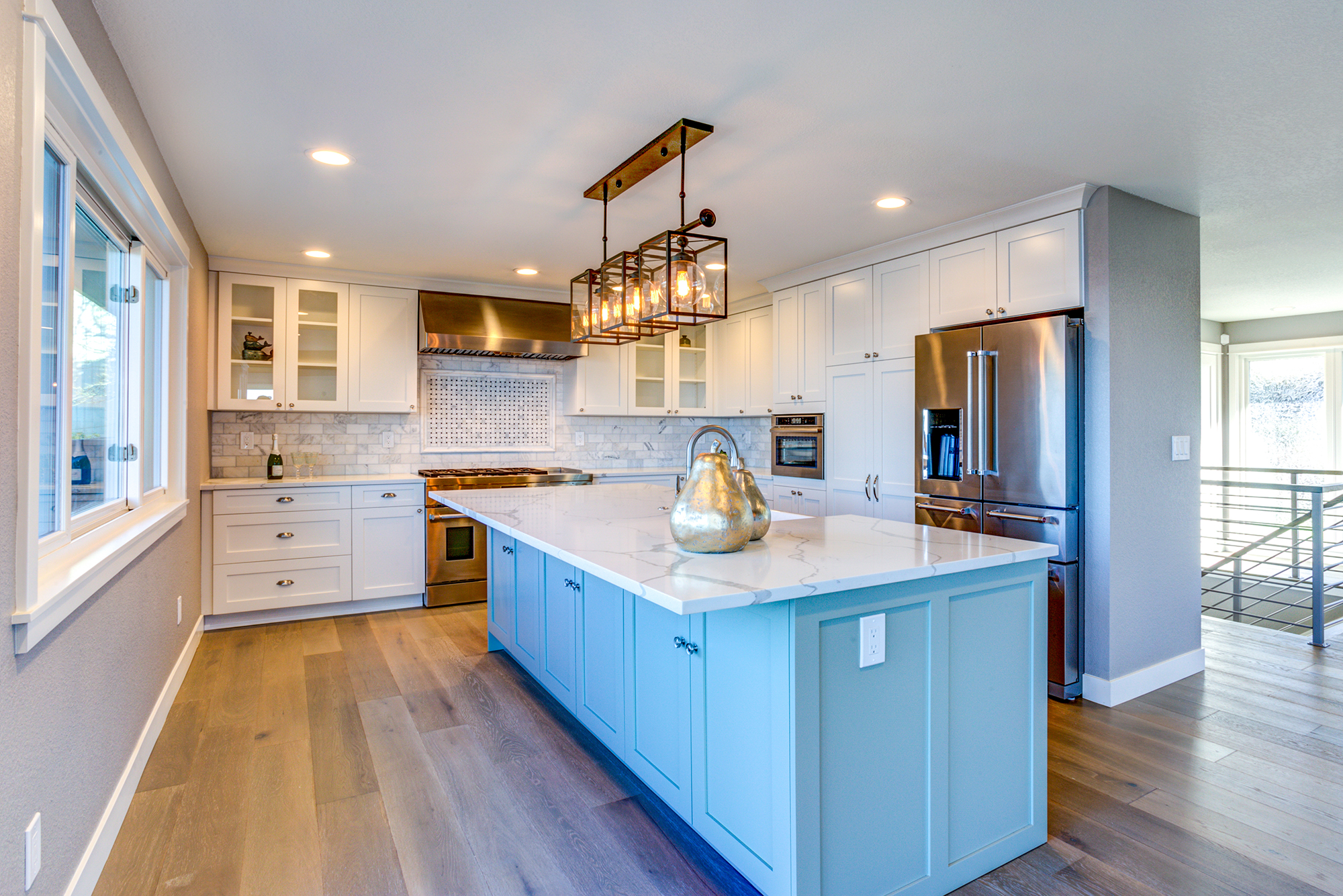
Kitchens are a collision point between beauty and reality. Water, heat, foot traffic, dropped pans, steam bursts, and cleaning routines all happen in one room. So when someone asks if hardwood “can” work in a kitchen, the honest answer is: it depends on whether the room is built and used in a way that respects wood as a living material. At America's Best Flooring across San Diego, CA, the kitchen conversation is one of the most common because it sits at a high-stakes decision moment.
First: define the kitchen risks (it’s not just spills)
Hardwood in kitchens fails for a handful of predictable reasons:
Moisture spikes: dishwasher steam, sink splashes, wet mopping, ice maker leaks
Standing water: unnoticed puddles under mats, fridge leaks, pet bowls
Moisture gradients: top surface dries quickly, underside stays damp, leading to cupping
Heavy point loads: chair legs, rolling islands, high heels, appliance movement
Traffic grit: sand and debris act like sandpaper and dull finishes
Hot take: The biggest enemy is not the occasional spill. It’s repeat micro-wetting that creeps into seams over months.
The floor spec that works best (most of the time): engineered hardwood
For kitchens, engineered hardwood usually outperforms solid because it handles humidity swings and short-term moisture exposure better. Not waterproof, but less reactive.
Kitchen-friendly engineered characteristics to look for:
Stable core construction (multi-ply over cheap core)
Appropriate wear layer (thicker is better for long-term refinishing potential)
Finish system designed for abrasion and chemical resistance (kitchens see cleaners, acids, oils)
Solid hardwood can work too, but it’s less forgiving. If you’re set on solid, you’ll want tighter humidity control and a high-discipline maintenance routine.
Subfloor moisture: the non-negotiable gatekeeper
Before installing hardwood in a kitchen, subfloor prep is non-negotiable.
If you’re on a slab, insist on RH testing (ASTM F2170) and follow manufacturer limits. If on a wood subfloor, measure subfloor moisture content and compare it to the flooring.
Kitchen-specific details that matter:
Slab moisture may be higher near exterior walls and plumbing chases
Old dishwashers can create chronic moisture zones you don’t see
Leaks from supply lines can saturate subfloors and ruin even “perfect” installs
Install method: how you manage the seam vulnerability
Kitchens are seam-driven problems. Water doesn’t soak through the plank surface first. It sneaks into joints.
Glue-down engineered (on slab) often performs well because:
It reduces hollow sound and movement underfoot
It can stabilize the floor over concrete
Some adhesive systems also contribute to moisture mitigation (when rated and used correctly)
Nail-down can work on wood subfloors but needs a stable subfloor, correct fastener schedule, and a plan for expansion.
Floating floors are the most seam-sensitive in kitchens because movement can open micro-gaps and let moisture travel. If you go floating, your expansion planning and underlayment choices matter even more.
Finish matters more than species in kitchens (most people get this backward)
Species affects dent resistance. Finish affects stain resistance, seam protection, and chemical durability.
Kitchen-friendlier finish traits include:
Matte or low sheen to hide micro-scratches and smudges
High abrasion resistance for grit-heavy zones
Repairability (kitchens benefit from the ability to do spot refreshes)
Important: A harder finish is not always easier to repair. Some ultra-tough factory finishes resist wear but can be harder to blend in spot repairs.
Kitchen detailing that quietly prevents failure
These are the “boring” details that do the heavy lifting:
1) Expansion gaps and perimeter planning
Wood needs room to move. Kitchens have fixed cabinetry and islands. If the floor is pinched under toe kicks or trapped at transitions, it can buckle.
2) Appliance strategy
Put protection under fridges and dishwashers during moves
Plan for water line access and leak detection
Consider a drip pan where feasible
3) Entry grit control
Entry mats and a shoe-off zone reduce abrasive grit. This extends finish life dramatically.
4) Area rugs placed smartly
Runner rugs should not trap moisture underneath. Use breathable backing and lift/dry regularly.
5) Cleaning protocol
The “steam mop” idea needs to be retired. Use a cleaner approved for your specific finish, minimize water, and dry quickly.
When hardwood in the kitchen is a bad idea
Hardwood may be a poor fit if:
You have chronic leaks or older appliances you’re not replacing
You wet mop often or prefer heavy water cleaning
Your kitchen sees frequent large spills (kids/pets) with slow cleanup
Your slab moisture is borderline and you can’t do proper mitigation
In those cases, consider high-performance alternatives that still look elevated, then use hardwood in adjacent areas for continuity.
Hardwood in a kitchen is not a yes-or-no trend question. It’s a technical conditions question. If you build the right system, choose the right construction and finish, and treat seams like the priority, hardwood can stay beautiful for years.
To spec a kitchen-safe hardwood solution for your home, visit or contact America's Best Flooring. We serve Carmel Valley, La Jolla, Del Mar, Poway, Coronado, Rancho Santa Fe, Solana Beach, East Lake, Chula Vista, La Mesa, Encinitas, Carlsbad, Cardiff, San Marcos, Escondido, Santee, El Cajon, Rancho San Diego, and Ramona, CA and can guide you through product selection, moisture readiness, and installation approach that matches how your kitchen actually lives.


