

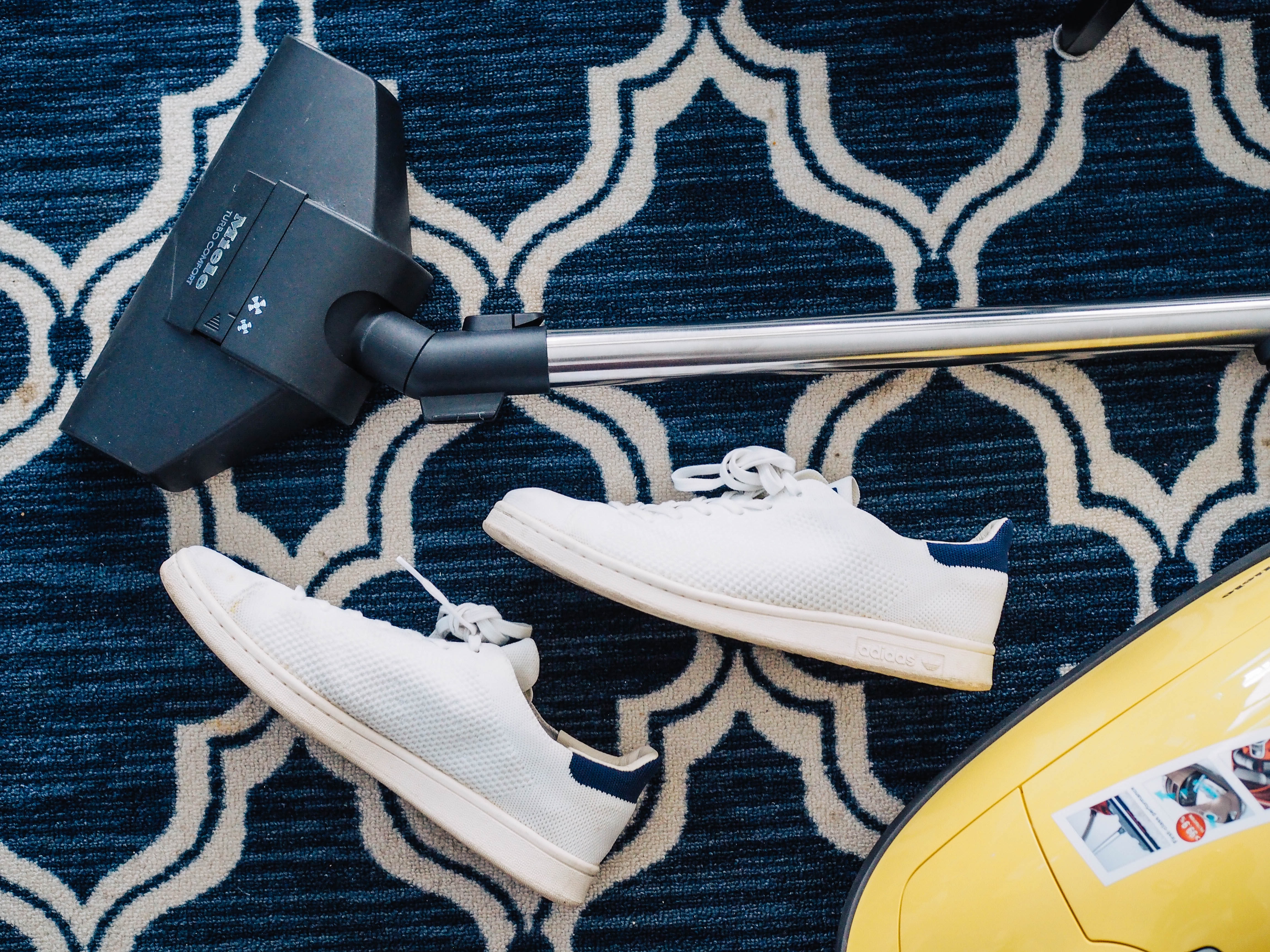
Near the ocean, floors face three different problems, and each one needs its own habit. Sand scratches, so the job is keeping it outside and removing whatever gets in while it's still loose. Salt leaves a residue that pulls water out of damp air, so it has to be cleaned off, using only as much water as your floor allows. Humidity makes wood and laminate swell and shrink, so the job is holding indoor humidity inside your floor's range through foggy summers and dry Santa Ana days.
The details depend on the floor. Hardwood, laminate, vinyl and carpet each have their own rules for water, vacuums and humidity, and some of those rules come straight from the manufacturer's warranty. Here's how each problem works near the coast and what to do about it on every type of floor.
Why beach sand is so hard on floors
Sand from a typical Southern California beach is mostly quartz, mixed with feldspar and dark flecks of biotite. Quartz rates a 7 on the Mohs hardness scale and feldspar about a 6, both harder than a steel knife blade or window glass at 5.5. Grains that hard, pressed between a shoe and the floor, scratch and dull a finish a little at a time.
Flooring manufacturers build this into their care instructions. Mohawk's care guide for its wood and laminate floors calls for regular dust mopping, sweeping or vacuuming to remove particles that could scratch the floor, and its carpet guide warns that gritty, sharp particles left in carpet abrade the pile. Near the beach, the goal is to keep as much sand outside as you can and to get the rest out while it's still loose.
Stop sand at the door
Mats do most of the work, and the type of mat matters. Mohawk's care guide, which it describes as the care required to keep its wood and laminate warranties in force, calls for two layers at every exterior door:
- Outside: a mat with coarse fibers to scrape grit off shoe soles and soft fibers to absorb moisture. Buy two sets so one can be cleaned while the other is down.
- Inside: an absorbent mat with a breathable backing that won't stain the floor. Clean both sides of it, and the floor underneath, so grit doesn't get trapped there and dull the finish. On a wood floor, shift it around now and then; Mohawk calls wood photosensitive, meaning its color changes with light.
- No rubber backings: Mohawk warns that rubber mats can stain the floor or trap moisture under them.
Vinyl warranties can be even more specific. The warranty for Karastan's LuxeCraft vinyl requires walk-off mats at all exterior entrances, with both soft and firm fibers, an extra set for each door so the mats can be swapped and cleaned weekly, and mats large enough to catch the soil.
A few habits keep the rest of the beach outside:
- Rinse feet and sandals at a hose or outdoor shower, and dry them before coming in.
- Shake out towels, bags, chairs and boogie boards outside, and store beach gear in the garage.
- Leave shoes on a tray by the door, and rinse and dry a dog's paws after a beach walk.
- Hang wet swimsuits and towels outside, because salt water dripping from them is the next problem.
If a standard mat doesn't fit your entry, we can bind carpet into a runner cut to size. Whatever you use inside, choose a breathable backing, following the same rule as Mohawk's interior mats.
Getting sand out once it's inside
Loose sand is easy to remove; the damage happens when it's ground underfoot or worked down into carpet pile. How to get it out depends on the floor:
- Hardwood and laminate. The National Wood Flooring Association (NWFA) suggests sweeping or dusting daily and vacuuming weekly. Use a microfiber dust mop or a vacuum with a hard-floor tool. Mohawk says a vacuum with a beater bar or power rotary brush head should never be used on its wood and laminate floors, and that microfiber mop heads should be washed without fabric softener, which can streak the floor. For a hardwood-only routine, see caring for hardwood two blocks from the beach.
- Vinyl. Sweep with a soft-bristle broom, or vacuum with the beater bar off. Care instructions for both Mohawk's SolidTech and Karastan's LuxeCraft vinyl rule out vacuums with a rotating beater bar.
- Carpet. Mohawk's care guide calls for vacuuming high-traffic areas daily, busier areas twice a week and the whole house at least weekly, which matches the Carpet and Rug Institute's schedule. The height setting matters: set too high, the vacuum can't pull grit from the base of the pile, and set too low, the brush can fuzz the surface. If your carpet has started to look frayed, it's worth checking whether your vacuum is damaging your carpet.
- Furniture. Put felt or plastic protectors at least an inch across under furniture legs, and clean grit off chair casters, as Mohawk's guide recommends. Check felt pads now and then, since sand that sticks to them gets dragged across the floor every time the chair moves.
Salt: why it turns damp on foggy mornings
Seawater is about 3.5 percent salt by weight, so every wet swimsuit, towel or dog that comes in from the surf leaves salt behind when the water dries. The NWFA warns that salt tends to leave a white, abrasive residue that can scratch a hardwood surface.
Salt has a second property that matters more near the coast: it pulls water out of the air. Air sealed over a saturated salt solution settles at about 75 percent relative humidity (75.5 percent at 68°F in the National Bureau of Standards' measurements). When the humidity climbs past that point, dry salt absorbs moisture until it dissolves into droplets, a change chemists call deliquescence. At San Diego's airport weather station, the average relative humidity at 4 a.m. is 76 to 80 percent from May through September. On those mornings, salt left near a door can turn from a dry crust into a damp, sticky film that holds moisture against the floor's finish and seams.
So salt has to be cleaned off, not just swept up, using only as much water as your floor allows:
- Solid hardwood. Wipe with a dry or slightly damp cloth, and avoid wet mops and steam mops, as the NWFA advises.
- Engineered hardwood and laminate (Mohawk). The rules follow the floor's wet warranty. Mohawk says never to damp mop one of its wood or laminate products unless it carries a Wet Resistance warranty or better, and never to wet mop one unless it's covered by an Enhanced Wet Resistance, Waterproof or WetProtect warranty. Where damp or wet mopping is allowed, its guide permits plain water, 1 cup of vinegar per gallon of water, or 1/3 cup of non-sudsing ammonia per gallon, and asks you to let the floor dry completely before putting interior mats back. Steam is off-limits unless the floor's wet warranty permits it.
- Vinyl. Damp mop, wash with a non-abrasive, neutral-pH cleaner, then rinse with clean water, remove the rinse water and let the floor dry, as the LuxeCraft care instructions describe. Those instructions also rule out ammonia, soap-based detergents, wax and mop-and-shine products, so don't carry the laminate recipe over to vinyl.
- Carpet. Blot salty wet spots with a white towel, then work out what's left with warm water. Mohawk's cleaning instructions warn against over-wetting, because excess moisture can harm the carpet's backing.
Humidity: marine layer mornings and Santa Ana days
Coastal humidity swings both ways. The National Weather Service's climate summary for San Diego describes relative humidity near 100 percent as typical for late nights and early mornings in the spring and summer marine layer season, and humidity runs above the annual average from May through October. Santa Ana winds swing it the other way. They're most common from October through February, most often in December, and they bring air so dry that relative humidity below 5 percent has been recorded in the city.
Floors react to both extremes. In humid air, wood takes on moisture and swells, and in dry air it shrinks, the NWFA explains. Floors that gain moisture can cup, with raised edges and lower centers on each board, while gaps that open and close with the seasons are considered normal. Laminate's fiberboard core also gains and loses moisture with the air, so its installation leaves an expansion gap around the room and its instructions set a humidity range for the life of the floor. Even carpet responds: Mohawk lists excessive humidity among the causes of carpet wrinkling.
Each floor has its own target:
| Floor | Indoor conditions to hold | Where the range comes from |
|---|---|---|
| Solid and engineered hardwood | 30 to 50 percent humidity, 60 to 80°F, year-round | NWFA |
| Laminate | 35 to 65 percent humidity, 60 to 85°F, for the life of the floor | Mohawk laminate installation instructions |
| Rigid-core vinyl | Below 65 percent humidity for 48 hours before, during and after installation | Mohawk SolidTech installation instructions |
| Carpet (and the rest of the house) | Below 60 percent humidity, ideally 30 to 50, to limit mold | EPA |
Carpet is where damp air costs the most: the EPA notes that porous materials such as carpet may have to be thrown away if they become moldy. If your home has wood, laminate and carpet, the ranges above overlap between 35 and 50 percent, which makes a sensible target for the whole house. The NWFA's range is year-round, so a beach house that sits closed up for weeks still needs its air conditioning or dehumidifier set to run.
A hygrometer, a small humidity gauge, shows you where you stand. On marine-layer days, air conditioning or a dehumidifier brings indoor humidity down (the EPA recommends both when needed), while windows left open to the fog let it back in. On Santa Ana days, keep windows closed and add moisture if readings drop below your floor's range; the NWFA recommends humidification systems for keeping wood floors in range when the air is dry.
Two spots deserve a closer look. Boards that have already cupped or crowned need the moisture source found and fixed before anything else, which is the first step in what to do (and not do) when hardwood floors warp. And laminate next to a sliding door gets water from wet feet and condensation on the door track, so if that's where your edges are lifting, read why laminate swells at coastal sliding doors and how to prevent it.
A coastal floor care schedule
- After every beach trip: rinse and dry feet, sandals and paws outside, shake out gear, and sweep or dust mop the entry.
- Daily: sweep or dust mop hard floors, and vacuum high-traffic carpet.
- Weekly: vacuum the whole house, swap and clean the entry mats, clean hard floors only as your floor allows, and check the hygrometer.
- Monthly: clean under and behind interior mats, clean casters, check felt pads, and wash microfiber mop heads without fabric softener.
- May through October: keep humidity down with air conditioning or a dehumidifier during foggy stretches.
- October through February: watch for Santa Ana days, keep windows shut and add humidity if readings fall; small seasonal gaps in a wood floor are normal.
- Every 18 months: have Mohawk carpet professionally cleaned by hot water extraction, which its warranty requires, and keep the invoice as proof.
- Every few years: recoat hardwood when it starts to look dull; the NWFA suggests renewing the finish every 3 to 5 years.
Repairing sand and humidity damage
Most coastal wear can be fixed. Scratches in a hardwood finish range from marks in the finish to damage that reaches the wood, and how to fix scratches on hardwood floors covers how to tell them apart and treat each one. For carpet that has rippled after a humid season, Mohawk says a competent installer can usually correct the wrinkling. Carpet Re-Stretch is one of our flooring services, along with flooring repairs and area rug binding.
Keep leftover material for these jobs. Mohawk recommends saving extra planks from a wood or laminate installation and a 2-by-3-foot piece of carpet for future repairs, and its warranty excludes color and gloss differences in wood or laminate added to a floor at a later date.
Choosing floors that are easier to keep near the beach
If you're replacing floors in a coastal home, a few choices make the routine easier:
- Entries and rooms that open to a patio or pool: waterproof luxury vinyl handles wet feet better than wood. Karastan's LuxeCraft, for example, is warranted against damage from water that lands on the floor, though the same warranty still requires mats at the door.
- Real wood in humid air: compare engineered and solid hardwood for a coastal climate before you choose; the comparison covers how each one moves with humidity.
- Carpet: Mohawk notes that light colors show more soil, darker colors work better in high-traffic areas, and multicolored or patterned carpet is especially good at hiding soil.
- Texture: the surface finish changes how easily a floor cleans; which floor texture is easiest to clean compares wire-brushed, smooth, hand-scraped and textured surfaces.
Planning floors that hold up to beach living
Sand, salt and humidity don't hit every room equally. The entry and the rooms by the patio take the sand and salt, and the whole house rides the humidity swings between marine-layer summers and Santa Ana winters. When you request a free estimate, we'll measure the rooms, talk through how sand, salt and moisture reach each one, and recommend floors that fit the way you live near the water.


