

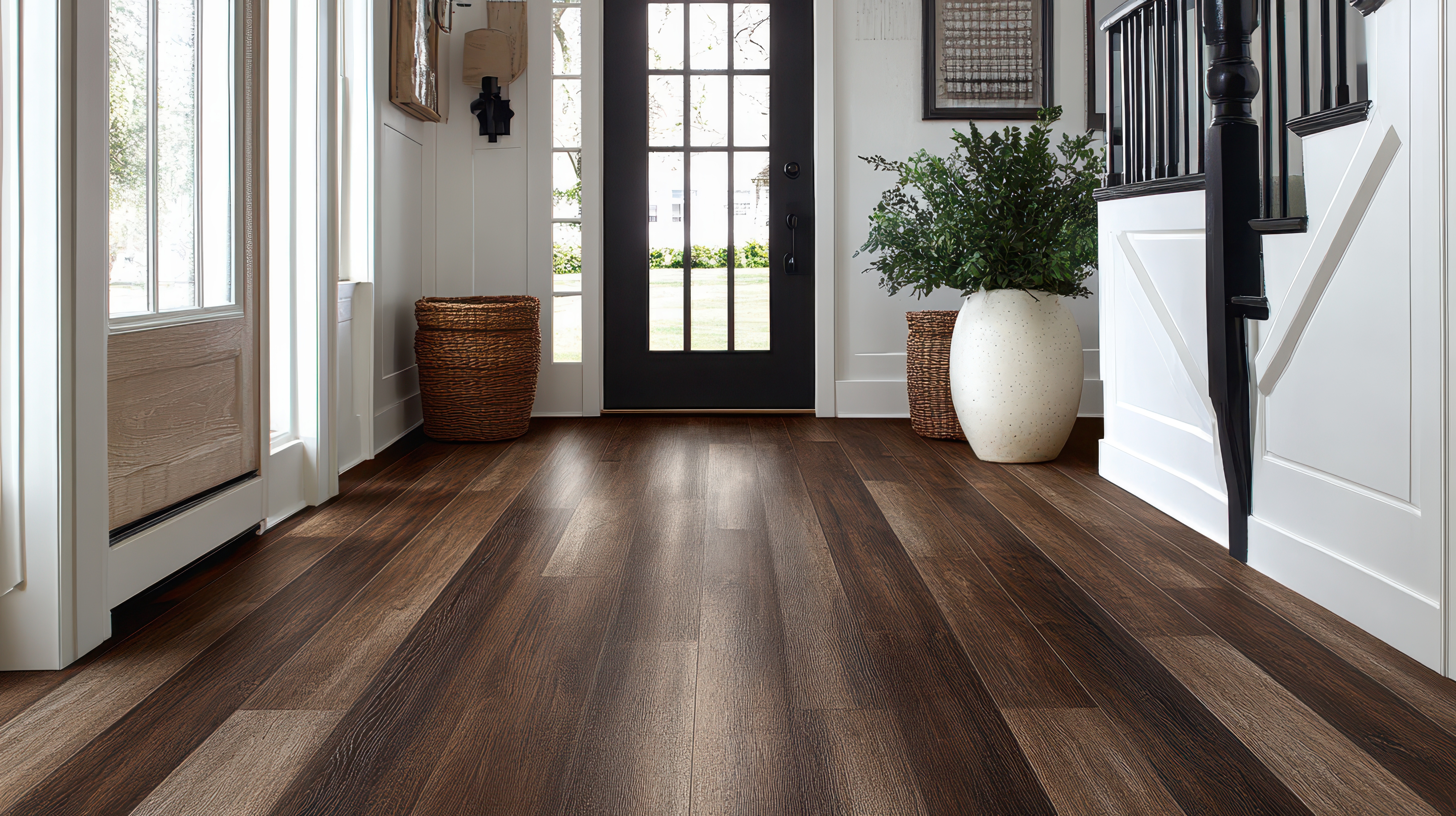
Using the same hardwood throughout bedrooms, kitchens, and stairs is one of the most requested looks in modern remodeling. It makes a house feel calmer, larger, and more intentional. Fewer visual interruptions usually create better flow. But full continuity is not just a style decision. It is a performance decision.
The reason is simple. Bedrooms, kitchens, and staircases do not place the same demands on a wood floor. Traffic patterns are different. Moisture exposure is different. Impact risk is different. Cleanability requirements are different. So while the same species and color can often be used across all three areas, the way the floor is built, finished, and detailed may need more thought than homeowners expect.
Why whole-house hardwood is so appealing
From a design standpoint, one hardwood floor can unify everything. It makes transitions cleaner, helps smaller homes feel more open, and removes the stop-start effect that happens when every room has a different surface.
This is especially helpful in San Diego homes with open living areas or visible stair runs from the entry. When the flooring continues without interruption, the architecture tends to feel stronger and less fragmented.
But visual continuity should not override practical performance. The right question is not whether the same hardwood can be used everywhere. It is whether the same hardwood system is appropriate everywhere.
Bedrooms are the easiest zone
Bedrooms are usually the lowest-risk area for hardwood continuity. Traffic tends to be lighter and slower. There is less exposure to spills, grit, and concentrated impact compared with kitchens or stairs.
That means bedrooms are often where almost any properly selected hardwood will perform well, as long as indoor humidity remains reasonably stable. If your hardwood works in the bedroom, that does not automatically mean it is the right choice for the kitchen or stairs. It just means the bedroom is unlikely to be the place where performance problems show up first.
Kitchens require a tougher standard
Kitchens are where the continuity dream gets tested. Hardwood can absolutely work in kitchens, but the floor needs to tolerate water drips, dropped utensils, chair movement, refrigerator traffic, and more frequent cleaning.
This is where finish matters. A very high-gloss finish may look dramatic on day one, but it usually shows scratches, micro-dents, and cleaning streaks faster in active kitchens. Lower-sheen finishes are often more forgiving.
Species hardness matters too, but not in a simplistic way. Harder wood can resist denting better, but finish performance and board construction matter just as much in daily life. In many homes, an engineered hardwood with a stable core is a smart solution if subfloor conditions or seasonal movement are concerns.
The kitchen also demands careful planning around expansion space, appliance clearances, and the order of installation relative to cabinetry. These details can affect how the floor moves and how cleanly it performs over time.
Stairs are a separate technical category
Stairs are the place where “same hardwood everywhere” most often needs a practical reality check.
A stair system is not just floor planks continued upward. It includes treads, risers, nosings, and edge details that take concentrated impact and visible wear. Stair noses see repeated force at the front edge, and they must be properly coordinated with the flooring product. If the hardwood line does not have a matching or compatible stair-nose solution, continuity can break down visually and functionally.
Slip resistance matters too. A super-slick finish that feels fine in a bedroom may feel less forgiving on stairs. Stair geometry also amplifies wear patterns, especially in the center walking line. That means texture, sheen, and finish durability need more scrutiny here than in flat-floor spaces.
When one hardwood still works best
Using the same hardwood in all three zones usually works best when the following conditions are true: the product has a stable construction, the finish is practical rather than overly glossy, the stair accessories are available and well-made, and the kitchen layout has been planned with wood movement and maintenance in mind.
It also helps if the hardwood color is forgiving. Mid-tone and lower-gloss floors tend to hide daily wear better than very dark or very pale options. That matters in kitchens and on stairs, where damage visibility can become the real issue rather than damage itself.
When continuity should be reconsidered
There are times when forcing the exact same hardwood everywhere is not the smartest move. If the kitchen is a very high-spill environment, if the stair run gets intense family traffic, or if the available stair-nose profiles look awkward, continuity may start costing more than it gives back.
Sometimes the better strategy is to keep the same wood look while adjusting the format or specification. For example, a compatible stair component package, a more stable engineered version of the same visual, or a carefully coordinated adjacent surface in a utility-heavy zone can preserve the design intent without creating a weak link.
Yes, you can often use the same hardwood in bedrooms, kitchens, and stairs, but continuity only works when the product is selected for the most demanding zones, not the easiest one. Bedrooms are usually simple. Kitchens need smarter finish and moisture planning. Stairs require proper accessory integration, wear resistance, and safety-minded detailing.
Visit our showroom to compare hardwood options, stair components, and finishes in person before you commit to a whole-house layout. We help homeowners across San Diego, La Jolla, Carlsbad, Chula Vista, Poway, Encinitas, Coronado, El Cajon, La Mesa, Rancho Bernardo, Palm Valley, Del Mar, Cardiff, Oceanside, Vista, San Marcos, Escondido choose flooring systems that look continuous and perform properly in real life. Contact us to schedule your estimate and get expert help with your hardwood project.


